
Turning Adversity into Action: Solving Today’s Biggest Challenges in Breast Cancer Research
Seongyeon Bae, Associate Research Scientist at the Vagelos College of Physicians and Surgeons
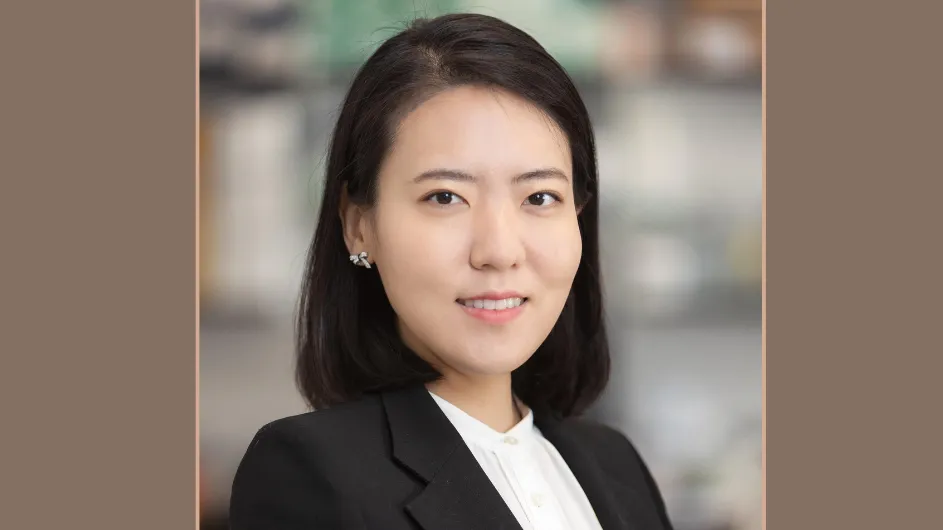
“Despite immense challenges, including the loss of my mentor and navigating uncertainty, I have remained deeply committed to my research. I investigate how and why breast cancer can relapse years or even decades later, and I explore new ways to prevent it. I continue to push forward with my research — driven by its potential to profoundly impact patients and their families.”
As a cancer researcher at the Ryeom Lab in the Department of Surgery, Seongyeon Bae is advancing critical knowledge in the fight against breast cancer metastasis. Originally from South Korea, Seongyeon’s work focuses on understanding cancer dormancy, a phenomenon that enables relapse decades after initial remission. Her pursuit is not only a scientific challenge, but also a deeply personal mission inspired by her mother’s experience with breast cancer. “The unpredictable nature of metastatic relapse is a significant problem,” Seongyeon explains. “I’m committed to uncovering the mechanisms behind it to identify new therapeutic approaches.”
Seongyeon’s research blends traditional experimental techniques with emerging computational methods, including bioinformatics. Her studies use mouse models and genomic analyses to explore why and how cancer cells become dormant and what triggers their reactivation. “I’m fascinated by the why,” she says. “Understanding the mechanisms behind these phenomena — and finding ways to regulate them — is both challenging and exhilarating,” says Seongyeon, whose dream from a young age was to become a scientist.
Seongyeon’s path to conduct research has been marked by extraordinary resilience. She began her postdoctoral training under the renowned Dr. Filippo Giancotti at MD Anderson Cancer Center, where she honed her expertise in metastatic dormancy models. When Dr. Giancotti transitioned to Columbia, Seongyeon followed him to continue her postdoctoral work under his mentorship.
However, Seongyeon’s journey took a heartbreaking turn after the move to Columbia, when Dr. Giancotti was diagnosed with terminal cancer. “Everything fell apart,” Seongyeon recalls, as Dr. Giancotti’s diagnosis not only brought the lab’s work to a standstill, but also meant she had to cope with the profound loss of a mentor who had been a guiding figure in her career.
As a junior postdoc at the time, Seongyeon faced the daunting task of navigating her research without guidance, while also grappling with personal grief and professional uncertainty. “During that time, I questioned whether I should abandon my project altogether,” Seongyeon recalls. She felt she had nowhere to go, and faced the possibility of her research coming to an abrupt end.
Despite these challenges, Seongyeon ultimately prevailed with determination and garnered new support to continue her research. “I really invested a lot in this project and I wanted to see it through,” Seongyeon said.
Dr. Sandra Ryeom became Seongyeon’s mentor, throwing her a rope and believing in her potential. In addition to offering a job, Dr. Ryeom enabled the opportunity for Seongyeon to continue her project. With the support of Dr. Ryeom and Dr. Ron DePinho, a collaborator at MD Anderson Cancer Center who also provided invaluable guidance, Seongyeon salvaged her research and continued her work at Columbia. “I was in the dark – but Dr. Ryeom’s mentorship at a time when I needed it the most, and her belief in my potential, gave me the strength to keep going,” Seongyeon shares.
Beyond her own research endeavors, Seongyeon is equally passionate about mentoring the next generation of researchers. She dreams of becoming a Principal Investigator and solving the most difficult questions of breast cancer research. Having experienced firsthand the profound impact of empathetic guidance during her most challenging moments, she aspires to be a source of support and inspiration for others. “If I can succeed after overcoming these obstacles, I want to help others navigate their own challenges,” she shares.
Seongyeon’s story is a powerful reminder of the resilience required to thrive in the face of adversity. Her journey, fueled by personal motivation and supported by compassionate mentorship, illustrates the transformative impact of perseverance in science and research. As she continues to push the boundaries of cancer research, Seongyeon exemplifies the profound influence one researcher can have — not only in the laboratory, but also in the lives of those they inspire.
Envisioned by Dr. Jeannette M. Wing, Executive Vice President for Research, the “Researcher of the Month” series celebrates Columbia University researchers at all levels — students, postdocs, and faculty — by showcasing their scientific contributions, passion for their work, and personal stories.