
Persistence, Passion, and Gratitude Meet Bold Ideas and New Technologies To Drive Novel Insights
Joan Pulupa, Associate Research Scientist at Columbia University’s Zuckerman Institute
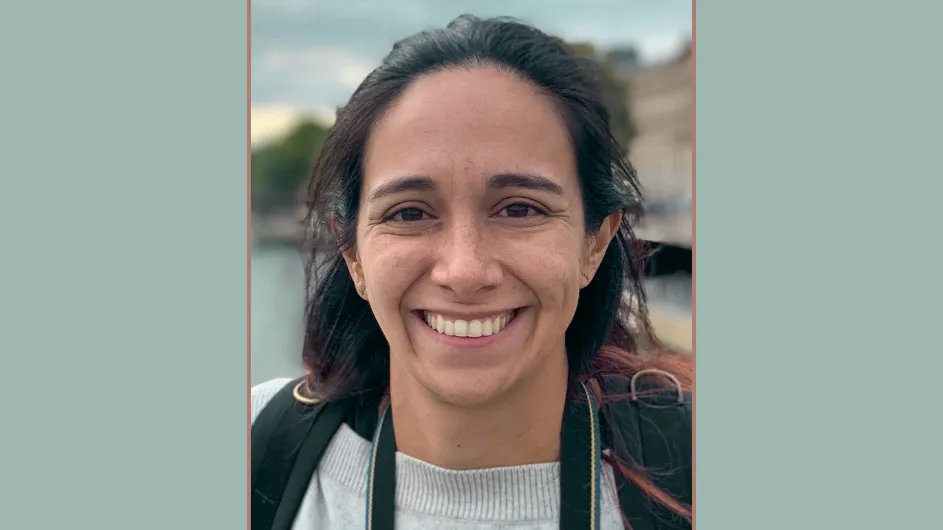
“I fell in love with academic science as an undergraduate, and it led me to where I am today. I cannot imagine being happier doing anything else.”
Joan Pulupa, PhD, is an Associate Research Scientist at Columbia University’s Zuckerman Institute, where she works in the Lomvardas Lab under the mentorship of Dr. Stavros Lomvardas. A trained microscopist who studied both physics and biology as an undergraduate, Pulupa has long been captivated by microscopy’s ability to reveal cells in motion—enabling real-time viewing of proteins performing work inside living cells.
When Pulupa began conducting research during her first year of college, she was immediately drawn to the collaborative environment and spirit of discovery. “I fell in love with academic science as an undergraduate, and it led me to where I am today,” she reflects.
In her recently published Nature paper, Pulupa uncovered a novel gene-regulatory mechanism driven by solid-like condensates—offering new insight into how stable long-range genomic contacts are sustained for the entire lifespan of a neuron. “No one expected these kinds of solid-like condensates to exist,” Pulupa explains. “Looking forward, I’ve found that these solid-like condensates are present not only in olfactory neurons, but across many neuron types, representing a turning point in understanding how chromatin might be organized in these long-lived cell types.”
Learn More
Currently in the Lomvardas Lab, Pulupa investigates the relationship between chromatin architecture and gene regulation. A typical day often begins with checking on mouse lines and managing cell culture. Then during afternoons, she usually turns to imaging, which involves working with a spinning-disk confocal microscope or with a super-resolution, single-molecule localization microscope. Later, she analyzes her datasets by writing code to process the images she generates.
Pulupa is particularly excited to integrate her microscopy expertise with cutting-edge, live-cell techniques to illuminate how chromatin organization shifts in real time. For her, the thrill lies in watching molecular-level interactions unfold as they happen. Many approaches exist to study this biological phenomenon—but few approaches capture its dynamic nature. As neurons mature, they undergo dramatic changes in both chromatin structure and gene expression, making them an ideal model system. “It’s a perfect combination of the biological questions I care about and the techniques I’m trained in,” she notes. “We can push both technology and biological insights forward in the same system.”
Despite the powerful technological tools available in her field, Pulupa believes there is still much more to uncover. “The textbook view of how DNA is organized and stored is simplistic and fails to capture what actually happens in the nucleus,” she says. “There is a lot more fundamental biology yet to be discovered.” For example, in diseases such as cancer or neurodegeneration, genome organization becomes disrupted, underscoring the need to understand DNA’s fundamental architecture before these changes occur. “There is still tremendous space to push science forward and gain novel insights in this area,” she adds.
Pulupa feels fortunate to work at Columbia and within the Lomvardas Lab, where she is encouraged to pursue emerging ideas and seek answers to bold questions. “I cannot imagine being happier doing anything else,” she says. Outside the lab, she deeply values time with her family, and she is also a longtime tennis player, as well as an avid sewer who crafts her own garments. She is equally dedicated to mentoring students and trainees, helping them learn from one another and grow into future scientific leaders.
Envisioned by Dr. Jeannette M. Wing, Executive Vice President for Research, the “Researcher of the Month” series celebrates Columbia University researchers at all levels — students, postdocs, and faculty — by showcasing their scientific contributions, passion for their work, and personal stories.