
Living Drugs: Persistence, Ingenuity, and Hope in the Quest to Fight Cancer
Michel Sadelain, MD, PhD, Herbert and Florence Irving Professor of Medicine, Vagelos College of Physicians and Surgeons and Director, Columbia Initiative in Cell Engineering and Therapy
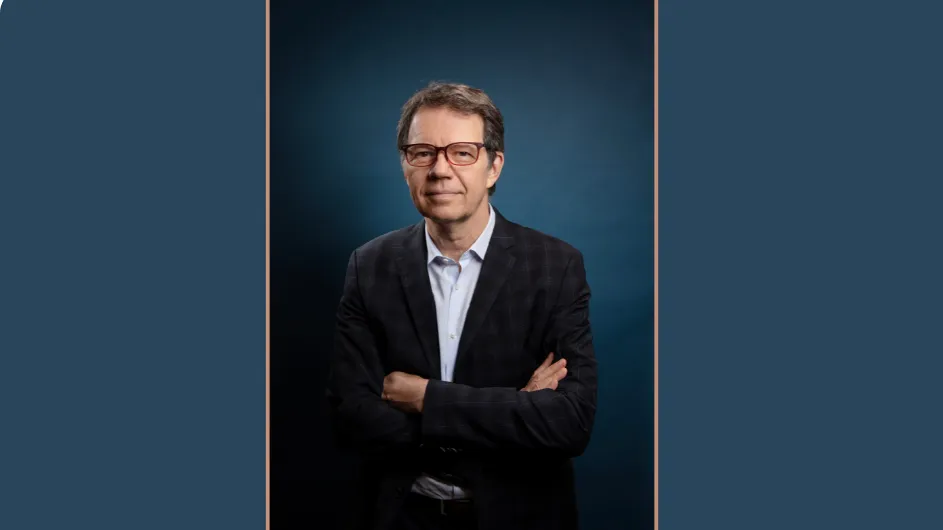
“These ideas were not accepted at first. Many said they wouldn’t work. But curiosity, persistence, and a willingness to learn across disciplines have brought us to the verge of the next explosion of possibilities in medicine.”
A trailblazer in T cell engineering, Michel Sadelain, MD, PhD, is widely recognized for his foundational role in the development of chimeric antigen receptors (CAR T) cell therapy. Discoveries originating from his laboratory have led to life-saving treatments for some of the sickest cancer patients who previously had little to no hope of recovery. Today, because of these advances, many patients with leukemia or lymphoma cancers have significantly improved chances of long-term survival. This impact is a direct result of Dr. Sadelain’s vision, persistence, and creative approach to science and medicine.
Dr. Sadelain is the Founding Director of the Columbia Initiative in Cell Engineering and Therapy (CICET) at the Vagelos College of Physicians and Surgeons at Columbia University Irving Medical Center. He also serves as the Herbert and Florence Irving Professor of Medicine and the Director of the Cell Therapy Initiative at the Herbert Irving Comprehensive Cancer Center (HICCC). His contributions have been recognized with numerous prestigious awards, including the Pasteur-Weizmann/Servier Prize from the French Academy of Sciences (2018), the Breakthrough Prize in Life Sciences (2023), the Warren Alpert Foundation Prize (2024), the Canada Gairdner International Award (2024), the King Faisal Prize (2025), and the BBVA Foundation Frontiers of Knowledge Prize in Biology and Biomedicine (2026).
In an interview with Columbia Research, Dr. Sadelain shared details of the trajectory of his work over the past three decades, reflecting on discoveries that have shaped his career, as well as his curiosity about the future impact of cancer research.
Early Research: Challenging Conventional Approaches to Immunology
Dr. Sadelain earned his medical degree in 1984 and completed a PhD in immunology in 1989. During this formative period, he became deeply immersed in research that challenged conventional approaches to immunology. Rather than focusing solely on traditional methods like vaccines to stimulate the immune system, he asked if it might be possible to go further—to engineer immune cells to fight disease more effectively.
At the time, it was already well established that T cells play a central role in defending the body against viral infections and attempting to fight cancer. However, T cells do not always succeed because cancer is exceptionally adept at evading immune surveillance, using a range of strategies to hide from detection, suppress immune responses, and continue growing and spreading in the body.
This reality led Dr. Sadelain to ask a bold and foundational question: “Could T cells be instructed—taught—to do more than what nature alone allows?” Answering that question required rethinking what it means to “teach” a cell. If T cells were to receive new instructions, those instructions would have to be written into the cell itself. Genes encode proteins, and proteins are what allow cells to recognize signals and carry out specific functions. Therefore, teaching a T cell a new mission meant introducing new DNA—new genes—into the cell. This genetic modification would become the method by which immune cells could be engineered to recognize and attack cancer more effectively.
At the time, this approach pushed well beyond the boundaries of conventional immunology. The tools required to genetically modify mammalian cells were only beginning to emerge, largely in experimental systems. For Dr. Sadelain, this meant becoming a student again in an entirely different discipline. He reflects, “After obtaining a medical degree and a PhD degree, I was a beginner altogether again, restarting as an apprentice and having to become a genetic engineer.” It was during this period that he developed methods to introduce genes into T cells, laying the technical foundation for all subsequent advances.
Next Steps: Developing Efficient, Persistent Treatment
Once it became possible to engineer T cells genetically, a new challenge emerged: “How would these T cells know which cells to attack?” T cells rely on receptors on their surface to recognize targets. Natural T cell receptors are limited by individual genetics and by the ways in which cancer disguises itself. To overcome this, Dr. Sadelain and his colleagues set out to engineer an entirely new kind of receptor—one that could reliably recognize cancer cells, regardless of a patient’s genetic background.
This work led to the development of chimeric antigen receptors (CARs), which are assembled by combining functional components from different proteins into a single synthetic structure that does not exist in nature. The term “chimeric” evokes the Greek mythological creatures composed of multiple parts, an apt metaphor for receptors built by stitching together distinct biological elements.
CARs are designed not only to recognize a specific molecule known as an antigen on the surface of cancer cells—but also to instruct the T cell on what to do once that molecule is found. Upon recognition, the engineered T cell receives the signal to kill the cancer cell and to divide, generating more T cells capable of continuing the fight. This persistence is critical because cancer is rarely eliminated in a single encounter, and any effective therapy must contend with the disease’s ability to adapt and evade immune attack.
Additionally, the CAR T cell strategy continues as long as cancer remains in the body—enabling T cells to overcome many of the tricks cancer uses to escape detection. This ongoing function is central to why CAR T cells came to be described as “living drugs.” A documentary about Dr. Sadelain’s story, titled "Living Drugs," bears this name to reflect the idea that once CAR T cells are introduced into the body, they are meant to endure and keep fighting cancer over time.
Implementation: Translating Research into Treating Patients
With a working receptor design in hand, the next question involved “where to begin clinically,” as Dr. Sadelain recalls. He and his team focused on leukemias and lymphomas because they are cancers with significant unmet medical needs and well-defined biological targets. They selected CD19, a molecule found on B cells, which are normal immune cells responsible for producing antibodies. While B cells are essential, cancerous B cells expressing CD19 could be selectively targeted and eliminated. In the early 2000s, the team demonstrated that T cells could be collected from blood, genetically engineered to express a CAR targeting CD19, and reinfused into the body—where they successfully eliminated cancer in experimental mouse models.
Translating this success to patients required yet another leap. There was no existing industry capable of manufacturing genetically engineered T cells for clinical use. Production had to be built within academic medical centers under stringent safety and regulatory oversight, which Dr. Sadelain accomplished with his colleague Dr. Isabelle Rivière.
In 2007, the groundwork was complete, and the first patients were infused with CD19 CAR T cells in New York City. These were individuals whose cancers had progressed despite every available standard treatment.
The treatment itself was striking in its simplicity. As Dr. Sadelain describes, “It’s very simple. In fact, patients say, ‘Is that all?’ And yeah, that’s all.” Delivered through a blood infusion, the engineered T cells enter the bloodstream and do what they are naturally equipped to do: travel. “The engineered T cells go into the bloodstream and they find their way into the cancer,” he explains. “That’s one of the reasons why T cells are so valuable. They know where to go, and they’ll find it. And then they can eliminate these cancers.”
“A Big Bang in the Field of Medicine”
Within a few short years, the impact was unmistakable. Dr. Sadelain recalls, “Within a small number of years, our center and two others reported very dramatic responses. The rest is history. This was a big bang in the field of medicine.”
In 2017, the first CAR T cell therapies targeting CD19 were approved by the U.S. Food and Drug Administration (FDA). Today, multiple CAR T cell therapies are approved, and research groups around the world continue to refine and expand this approach to address other types of cancers.
What began in the late 1980s as a question about the limits of immunology has evolved into an entirely new therapeutic paradigm. The arc of Dr. Sadelain’s work reflects not only scientific ingenuity, but also a willingness to continually learn, adapt, and connect disciplines in pursuit of a single idea: Immune cells, if properly engineered, can be taught to do more—and in doing so, can transform the future of cancer treatment.
Reflecting and Planning for Future Discoveries
Looking back, Dr. Sadelain reflects on how many of the most difficult battles have already been fought—and how those efforts have laid the foundation for what comes next. CAR T cell therapy not only succeeded clinically; it changed assumptions about what was possible. What was once viewed as an academic exercise became a new class of medicine, opening opportunities for a new generation of scientists to build on this work and extend cell engineering to new diseases. The groundwork has been laid, but the most exciting discoveries may still be ahead.
The success of CAR T cells has also expanded the role of academic medical centers. Traditionally, discoveries move from academia to industry for large-scale development. However, as Dr. Sadelain explains, “In the case of cell therapies, a new path will emerge where academic centers, large medical schools essentially, will perform the manufacturing of these medicines. We know how to produce them. They were invented in academia, gave great results, and were approved by the FDA. This is something that we at Columbia are very interested in exploring.” He adds, “I am delighted to see many young people attracted to this work because there are so many possibilities.”
Underlying these achievements is a challenge familiar to every researcher: deciding whether to persist or to pivot. As Dr. Sadelain reflects, “These ideas were not accepted initially. Some said this cannot work; the technology cannot be developed to make it work. Others feared genetic engineering in general. But today the tools are so amazing and there is so much to do that we are on the verge of the next explosion of potential applications of engineered immune cells.” Choosing to continue in the face of skepticism requires conviction, awareness of risk, and a thoughtful and deliberate willingness to move forward in spite of potential challenges—decisions every scientist must navigate in their own way.
Beyond the science, Dr. Sadelain finds joy in music, art, and his children, as well as the creative energy of New York City itself. For him, living and working in an environment that celebrates human imagination across disciplines is both grounding and inspiring—a reminder that scientific discovery is one expression of a much broader creative human endeavor.
Envisioned by Dr. Jeannette M. Wing, Executive Vice President for Research, the “Researcher of the Month” series celebrates Columbia University researchers at all levels — students, postdocs, and faculty — by showcasing their scientific contributions, passion for their work, and personal stories.