
Emergency Drenching Equipment
Emergency Eye Washing Equipment
The availability of emergency equipment is a critical safety measure in environments like laboratories where hazardous materials are present and commonly handled. Eyewash stations can provide emergency relief in the event of exposure to the eye from hazardous liquids, vapors, dusts, particles or other injurious objects. To ensure quick response in an emergency, eyewash stations must be visible, easily accessible, and reliable. This page contains important information on the types of eye wash units found in laboratories and other research areas at Columbia University, along with the requirements for proper maintenance and use.
Below are three of the most common eyewash units found at Columbia University. Other units are available throughout campus.
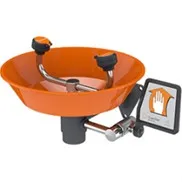
Wall mounted eyewash
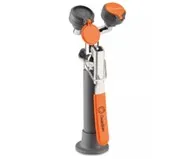
Drench hose emergency eyewash
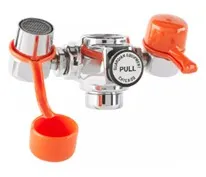
Sink mounted eyewash
The American National Standards Institute (ANSI) has established recommendations to ensure that eyewash equipment is performing correctly. Below is a checklist laboratories can utilize to ensure the proper performance of eyewash stations:
Laboratories are responsible for testing all emergency eyewashes weekly. These weekly tests ensure that eyewash units are readily providing clean and clear water at a suitable pressure.
To test the eye wash:
- Operate the eyewash for approximately 30-60 seconds.
- The water should immediately run clear and at a pressure that would allow both eyes to be rinsed comfortably
- The water should run at a tepid temperature, not too hot or too cold.
EH&S recommends using eyewashes to rinse glassware as a means of regular operation and testing. If water pressure in an eyewash is too low or high, the unit is clogged, the water appears dirty, or the eyewash is otherwise operating incorrectly or not working at all, place a Facilities service request to repair.